Chauncy harris biography template
Home / Biography Templates & Examples / Chauncy harris biography template
These papers helped establish his reputation as an important scholar in the field of urban studies.
In 1945, he and a former fellow student at Chicago, Edward Ullman, wrote a paper that became a seminal piece of scholarship: “The Nature of Cities.” The paper, published in the Annals of the American Academy of Political and Social Science, looked especially at the multiple-nuclei pattern of urban development, which had prophetic relevance for understanding American cities in the later 20th century.
The paper, published in the Annals of the American Academy of Political and Social Science, described the Multiple nuclei model of urban development, which had prophetic relevance for understanding American cities in the later 20th century. Over the course of his career, he made 14 trips to the Soviet Union and played an important role in fostering and promoting collaboration between American and Russian geographers.
In addition to his work on the Soviet Union, Harris made several important contributions to the field of American Urban Geography.
By the time of his first visit, he was already a well established and respected expert in the field. He was 89. He also made 14 trips to the former Soviet Union.
In 1962, Harris was editor of the English-language edition of Soviet Geography: Accomplishments and Tasks, published by the American Geographical Society.
In 1970, he published what is considered his most important work, Cities of the Soviet Union, which Conzen noted was “strikingly, very well received by Soviet academicians.”
He was very active in professional societies and served as president of the Association of American Geographers and the American Association for the Advancement of Slavic Studies.
The paper, published in the Annals of the American Academy of Political and Social Science, described the Multiple Nuclei Model of Urban Development, which had prophetic relevance for understanding American cities in the later 20th century.
|
This model gives a suggestion as to the possible land use within a city.
By the time of his first visit, he was already a well established and respected expert in the field. His doctoral dissertation, “Salt Lake City: A Regional Capital,” analyzed the service functions and extensive influence of the city.
Harris then turned his interest to the classification of cities and presented his first paper at the Association of American Geographers in 1941.
He published his first two works on the Soviet Union in 1945.
In particular, in 1945 he wrote The Nature of Cities with Edward Ullman.
In addition to his research career, he also served in many senior administrative positions at the University. That same year, he enrolled at Chicago and then studied as a Rhodes scholar at Oxford University, where he received B.A.
and M.A degrees at the London School of Economics.
He also received an M.A. from the London School of Economics before returning to the U.S.
He completed his Ph.D. Harris’ interest was timely, as the coming of the Cold War would quickly close off most of Soviet society from Western view. Despite limited data, he was able to publish two important papers on the Soviet Union in the Geographical Review in 1945.
at the University of Chicago in 1940. He started studying Russian and exploring the available cartographic and statistical information about the country. Harris traveled regularly to the Soviet Union and played a key role in establishing a healthy dialog between Soviet and American scholars. Life and careerHarris was born in 1914 in Logan, Utah.
He started studying Russian and exploring the available cartographic and statistical information about the country. His early work in this area left him well prepared in the late 1950s when the Soviet Union began opening up to foreigners. 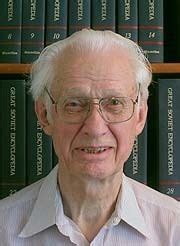 His seminal works in the field of American urban geography ("The Nature of Cities" and "A Functional Classification of Cities in the United States") along with his work on the Soviet Union during and after the Cold War era established him as one of the world's foremost urban geographers. at the University of Chicago in 1940. and added valuable maps, appendices and numerous footnotes to the text, which was first published in 1949.
This important work resulted in 10 reprints of the article and its translation into Russian. “Chauncy Harris was a remarkable contributor to, and a singular international ambassador for, professional geography,” said Michael Conzen, Chair of the Committee on Geographical Studies.
|
|